
How to Choose a Compounding Pharmacy in Los Angeles (2026 Guide)
Not all compounding pharmacies are alike. Here's exactly what to check, licensing, USP standards, turnaround, and pricing, before trusting one with your prescription in LA.
The short answer: a good Los Angeles compounding pharmacy holds an active California Board of Pharmacy license and compounds under USP 795, plus USP 800 for hazardous drugs. It publishes its pricing. It turns most prescriptions around in one to two business days. And it lets you talk directly to the pharmacist preparing your medication. Below is exactly how to check each of those boxes.
KeyPoints
- Verify the pharmacy's California license at search.dca.ca.gov before transferring a prescription
- Ask which USP chapters the pharmacy follows, USP 795 covers non-sterile compounds, USP 800 covers hazardous drugs like hormones
- 503A pharmacies make compounds made for you; 503B facilities batch-produce for clinics
- A pharmacy that quotes the price before it fills is a good sign; compounding is almost always cash-pay
- You should be able to reach the compounding pharmacist directly, not a call center
EndKeyPoints
Why does the right compounding pharmacy matter?
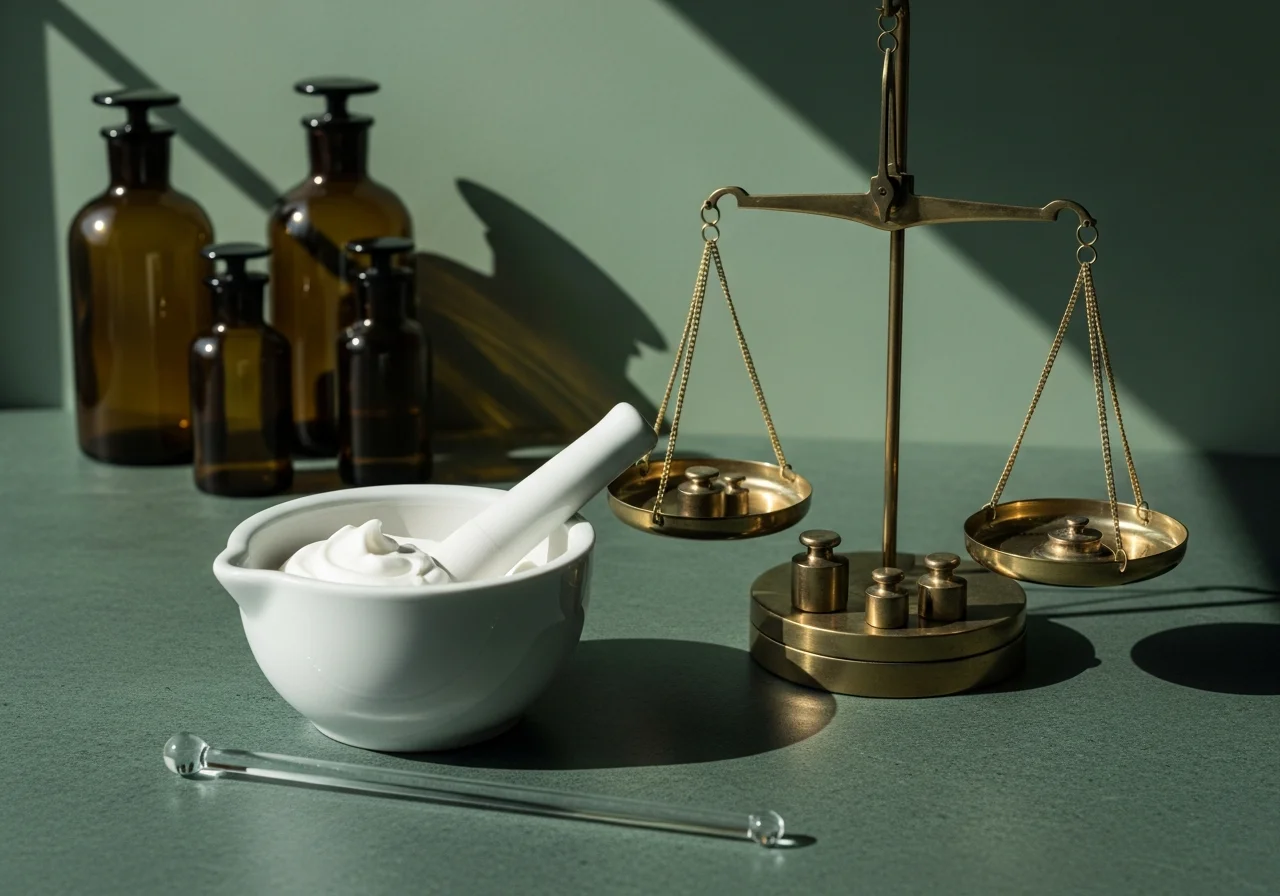
Unlike a chain pharmacy dispensing factory-sealed products, a compounding pharmacy makes your medication, weighing active ingredients, selecting the base, and checking the preparation. Quality varies with the pharmacy's standards, equipment, and the pharmacist's experience. Los Angeles has dozens of compounding pharmacies; a few minutes of due diligence protects both your health and your wallet.
What licenses should an LA compounding pharmacy have?
At minimum: an active California State Board of Pharmacy license. If the pharmacy handles controlled substances, it also needs a DEA registration. You can verify any California pharmacy license in under a minute at the Department of Consumer Affairs lookup. A pharmacy that hesitates to share its license number is telling you something.
What are USP 795 and USP 800. And why should you care?
USP <795> is the national standard for non-sterile compounding: it governs ingredient sourcing, beyond-use dating, facility cleanliness, and documentation for creams, capsules, gels, and solutions. USP <800> adds protections for hazardous drugs, including many hormones, covering ventilation, protective equipment, and dedicated workspaces. Ask directly: "Do you compound under USP 795 and 800?" The answer should be an immediate yes.
503A vs. 503B: which one are you actually looking for?
| Feature | 503A Pharmacy | 503B Outsourcing Facility |
|---|---|---|
| Who it serves | Individual patients | Hospitals and clinics |
| Prescription required | Yes, written for you | No, batch orders |
| Primary regulator | State Board of Pharmacy | FDA (cGMP) |
| Typical products | Custom creams, capsules, troches | Bulk pre-made injectables |
| Example | Your local compounding pharmacy | Large national facility |
If you're a patient with a prescription, you want a 503A pharmacy. If you're a med spa or clinic buying office stock, that's 503B territory, a different supply chain entirely.
What questions should you ask before transferring a prescription?
- "Where do you source your ingredients?" The answer should be FDA-registered suppliers providing USP-grade ingredients with certificates of analysis.
- "What's your turnaround time?" 1–2 business days is standard for most non-sterile compounds.
- "What will it cost?" Ask for the price before the prescription is filled.
- "Can I speak with the compounding pharmacist?" If the answer is no, keep looking.
- "Do you deliver?" Most LA compounding pharmacies ship; some, including ours, also offer local delivery on the Westside.
Red flags to avoid
- No verifiable California license
- Selling "compounded" medications without requiring a prescription
- No pharmacist available to answer formulation questions
- Prices that only appear after you've handed over payment information
- Claims that compounded drugs are "FDA-approved", by definition, they are not
About Generation Pharmacy
We're a second-generation, family-run 503A compounding pharmacy on West Pico Boulevard in Los Angeles. Our pharmacists compound dermatology, hormone, hair restoration, and wellness formulations under USP 795/800, with most prescriptions ready in 1–2 business days. Browse our formulation catalog, explore the ingredient library, or call 424-228-1049, a pharmacist answers, not a phone tree.
Frequently Asked Questions
What is a 503A compounding pharmacy?
A 503A compounding pharmacy prepares medications made for you from a prescriber's order, regulated primarily by the state board of pharmacy, in California, the California State Board of Pharmacy. This differs from a 503B outsourcing facility, which produces large batches for hospitals under FDA oversight. Generation Pharmacy is a 503A pharmacy in West Los Angeles.
How do I verify a California pharmacy's license?
Search the pharmacy's name or license number on the California Department of Consumer Affairs license lookup (search.dca.ca.gov). A legitimate compounding pharmacy will share its license number without hesitation.
How long does compounding take in Los Angeles?
Most non-sterile compounds, creams, capsules, solutions, troches, are ready in 1–2 business days at Generation Pharmacy. Complex formulations may take longer. Ask any pharmacy for its standard turnaround before transferring a prescription.
Does insurance cover compounded medications?
Usually not. Most compounding pharmacies, including ours, operate cash-pay and quote the price before filling. Some patients submit receipts to insurance or use HSA/FSA funds, ask your plan administrator.
Can a compounding pharmacy deliver to my home in LA?
Yes. Generation Pharmacy offers local delivery on the Westside (fees quoted when your prescription is ready) and ships within California in discreet packaging, with local pickup available at our Pico Boulevard pharmacy.
Disclaimer: This content is provided for informational purposes only and is not intended as medical advice, diagnosis, or treatment. Always consult with a qualified healthcare professional regarding any medical condition or before starting any new treatment.
Related Articles
Compounded Peptides in 2026: What the FDA Panel Changed, and What a Non-Sterile Pharmacy Can Make Today
In July 2026 an FDA advisory committee recommended six peptides for the 503A list. None of them is legal to compound yet. Here is where each one stands, which peptides are components of approved drugs, and the non-peptide formulas prescribers are asking for most.
Compounded Testosterone: How Prescribing Works in California
Testosterone is a Schedule III controlled substance. Here is how a compounded testosterone prescription reaches a California pharmacy: who can write it, how it has to be sent, and why the pharmacy needs a DEA registration. Rx-only, prescriber-directed.
Understanding Hyperpigmentation and the Ingredients that Target it
Learn about the science behind hyperpigmentation and the ingredients prescribers use for different types of skin discoloration.