

Vitamin B3
Niacinamide
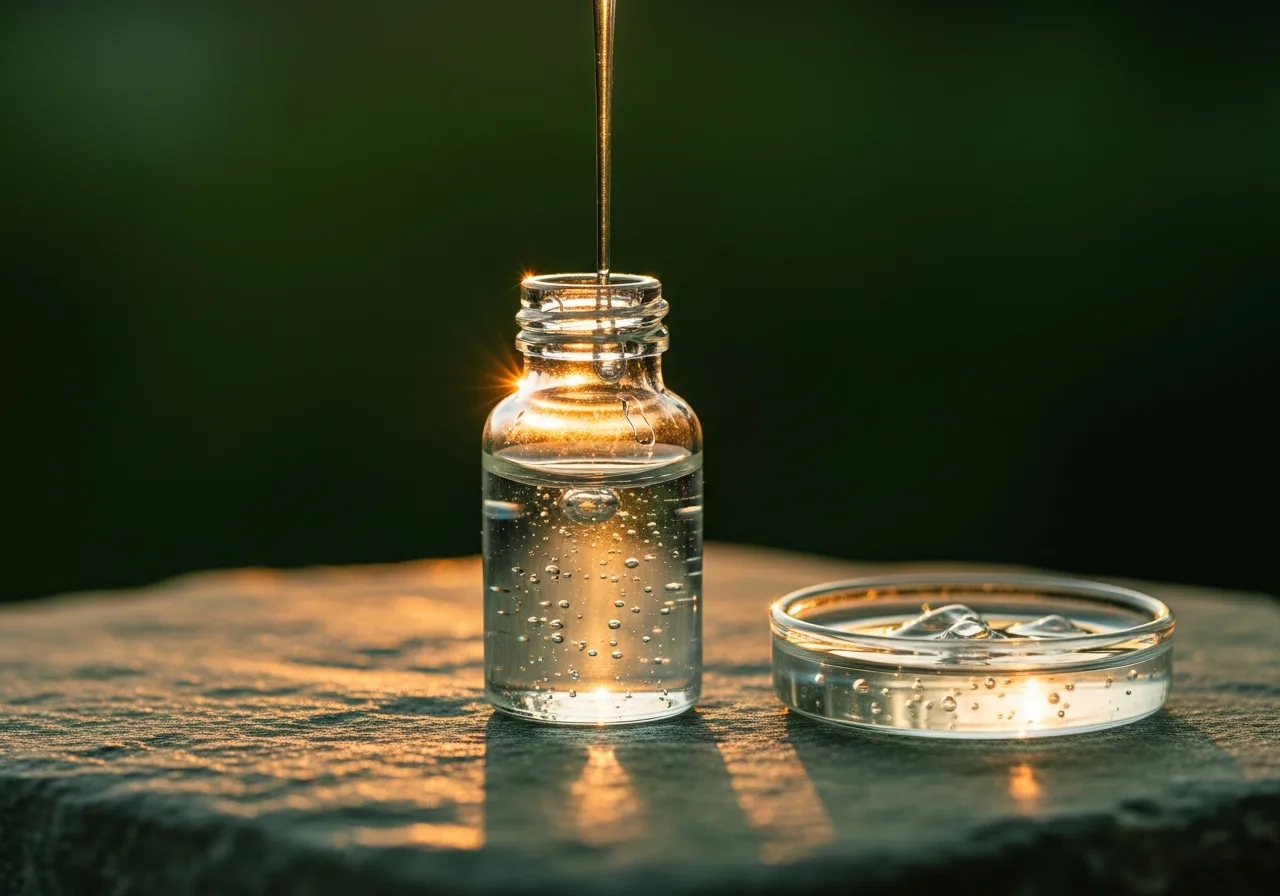
Clear to slightly opalescent liquid-gel
Typical Strength
2%–5%
Formulations
9 compounds
Formula
C₆H₆N₂O
Mol. Weight
122.12 g/mol
How It Works
Mechanism of action
Precursor to NAD⁺/NADP⁺ cofactors. Strengthens the ceramide-lipid barrier, inhibits melanosome transfer, and suppresses NF-κB–mediated inflammation.
Did you know?
Niacinamide is one of the few actives that pairs safely with nearly every other compound — including retinoids, acids, and peptides.
What compounding can change
When Niacinamide is compounded for one patient, your prescriber can choose the concentration, combine it with other ingredients, and pick the base. Commercial products come in fixed strengths and bases.
Available In
Formulations with Niacinamide
Tretinoin / Niacinamide / Hyaluronic Acid Cream
Retinoid program with barrier-friendly add-ons (niacinamide/HA).
Tretinoin / Azelaic Acid / Niacinamide Cream
Tiered-strength all-in-one renewal cream pairing retinoid turnover with azelaic tone correction.
Hydroquinone / Tretinoin / Niacinamide Cream
Clinician-cycled HQ program for stubborn melasma and PIH.
Azelaic Acid / Tranexamic Acid / Niacinamide Cream
High-strength azelaic acid with tranexamic acid for melasma and dark spots when hydroquinone is not wanted.
Benzoyl Peroxide / Clindamycin / Tretinoin / Niacinamide Gel
Acne combination with a customizable, clinician-directed intensity.
Tretinoin / Clindamycin / Azelaic Acid / Niacinamide Cream
The retinoid-antibiotic-azelaic acne combination without benzoyl peroxide, for patients who cannot tolerate bleaching or dryness.
Spironolactone / Niacinamide Cream
Hormonal acne support without oral therapy (clinician-led).
Azelaic Acid / Ivermectin / Metronidazole / Niacinamide Cream
Comprehensive single-jar rosacea program targeting papules, redness, and barrier in one step.
GHK-Cu / Niacinamide / Hyaluronic Acid Cream
Copper tripeptide (GHK-Cu) cream, compounded to the prescriber's order.
Commonly paired with
These ingredients frequently appear alongside Niacinamide in our formulations.



Please note: Compounded medications require a prescription from a licensed prescriber for an individual patient. Compounded medications are not FDA-approved. The FDA does not review them for safety, effectiveness or quality. A compounded medication is not the same as, or a generic version of, any FDA-approved drug. This page is general information, not medical advice. Your prescriber decides whether a treatment is right for you and sets the final ingredients, strength and dosage form.